Posts

Practising, consolidating and refining learning...developing independent spelling projects.
Image
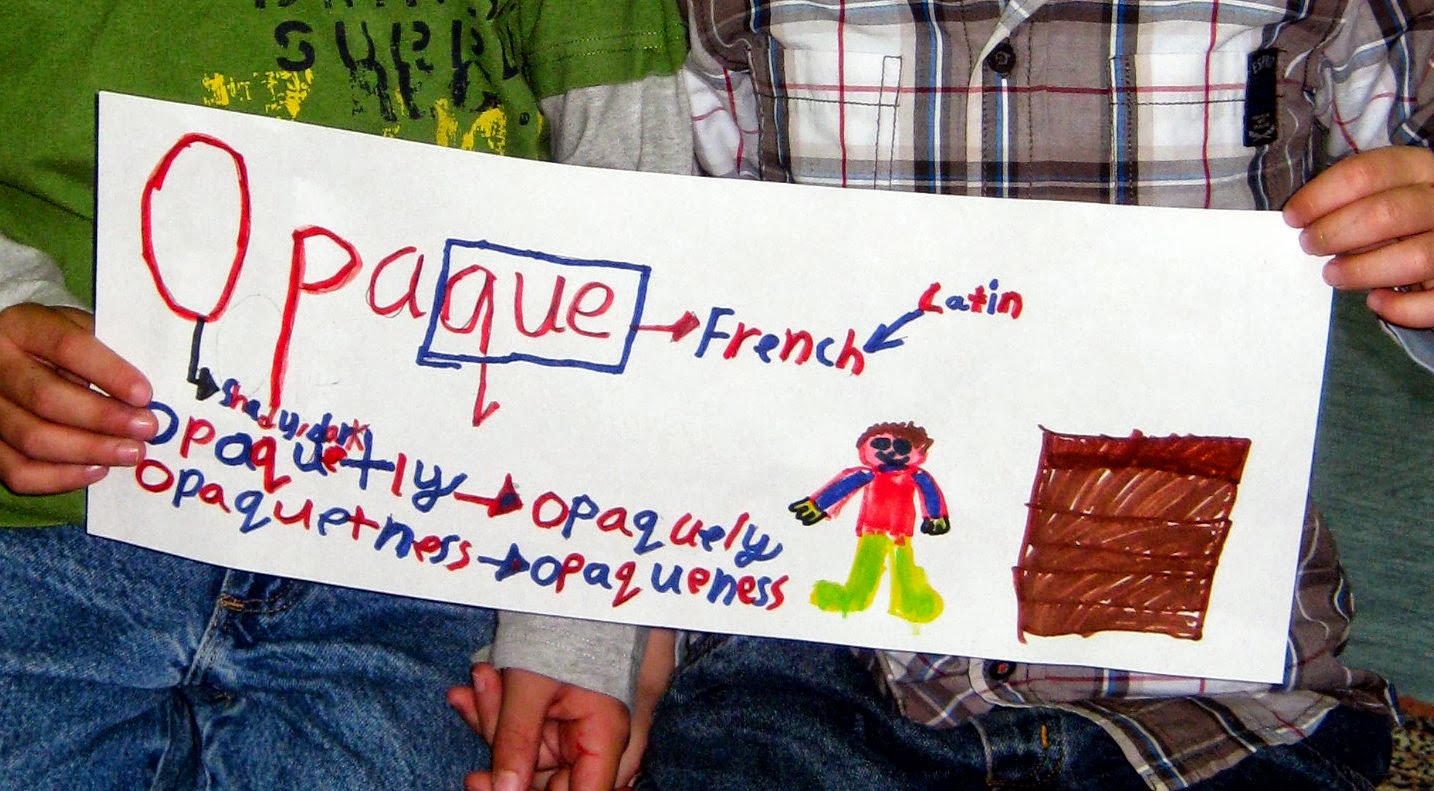
Developing Independent Word Inquiry Projects For many years  Brian Cambourne  has been researching and writing about the significance of providing 8 learning conditions to ensure deep, purposeful learning and understanding in literacy. Two of these conditions are  use and response . We must provide many opportunities for learners to apply their developing understanding about how the English system works.  Once the students have had multiple opportunities and experiences to learn about the structure of words, they need time to independently practice and apply their understanding. The students can question and reflect on what they know, consolidate new learning and deepen understanding of how the English spelling system works. Developing independent word inquiry projects is one way of ensuring children are given opportunities to fine tune and practice their learning. In this particular activity the children i...
Interesting and boring suffixes!

Image
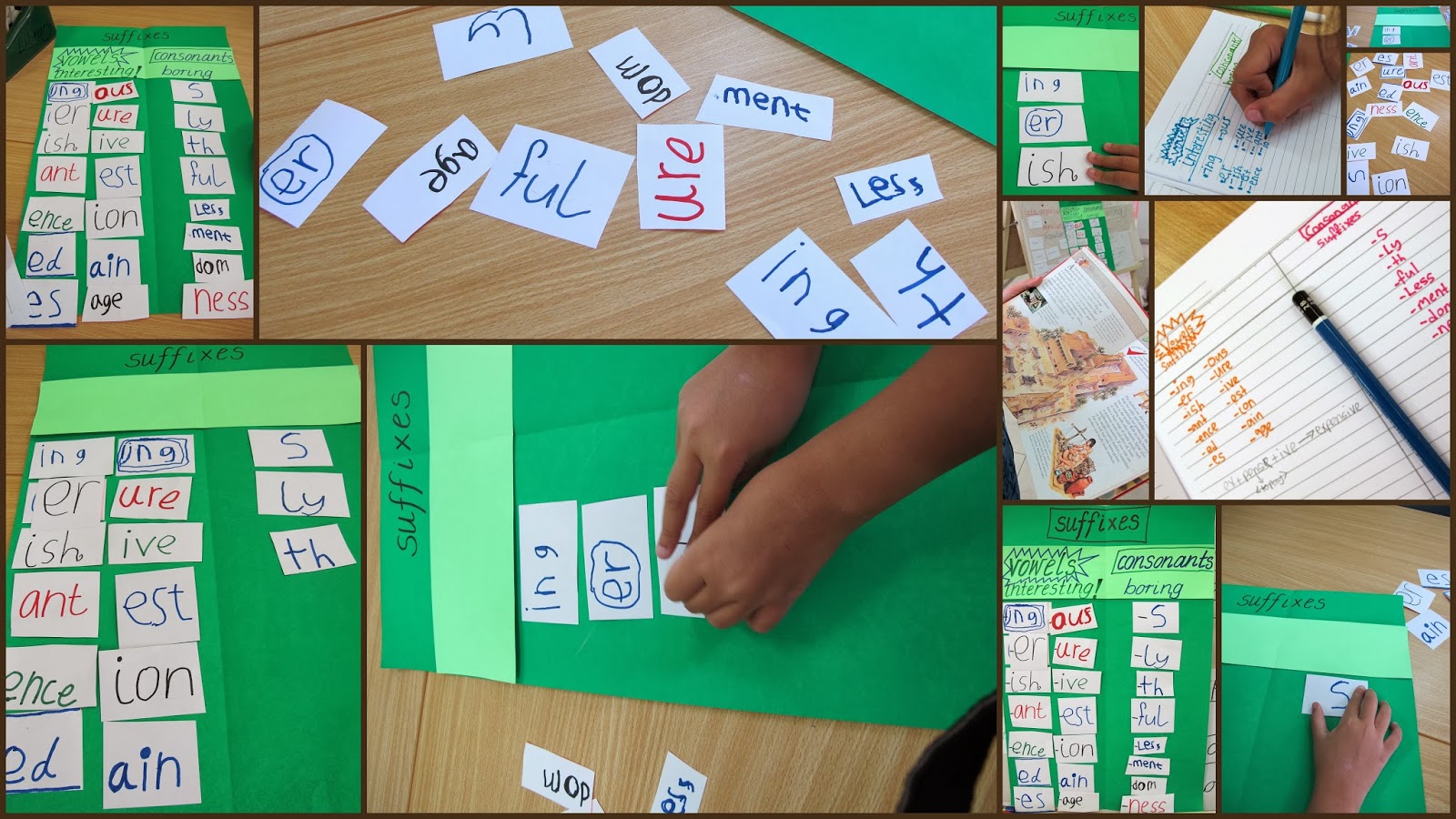
When a suffix is fixed to a base, why do some bases  make a change but others do not? How can we identify which suffixes cause a change to the base? These questions, and many others, begin to quickly emerge when students are exposed and introduced to the underlying structure of words, through the morphological word sum.                              Even young children begin to critically observe and then question why sometimes there is a change and other times there is not a change to the base.  Here is a suffixing activity that demonstrates  the importance  of the vowel suffixes. To begin the learning journey, the students perform a 'suffix hunt'. If I am planning this activity with young children, I prepare a selection of known big books and class texts for the students to search through.  The students identify an appropriate word in a big book, or other appropriate text/literatur...

Opening up the mystery box!

Image
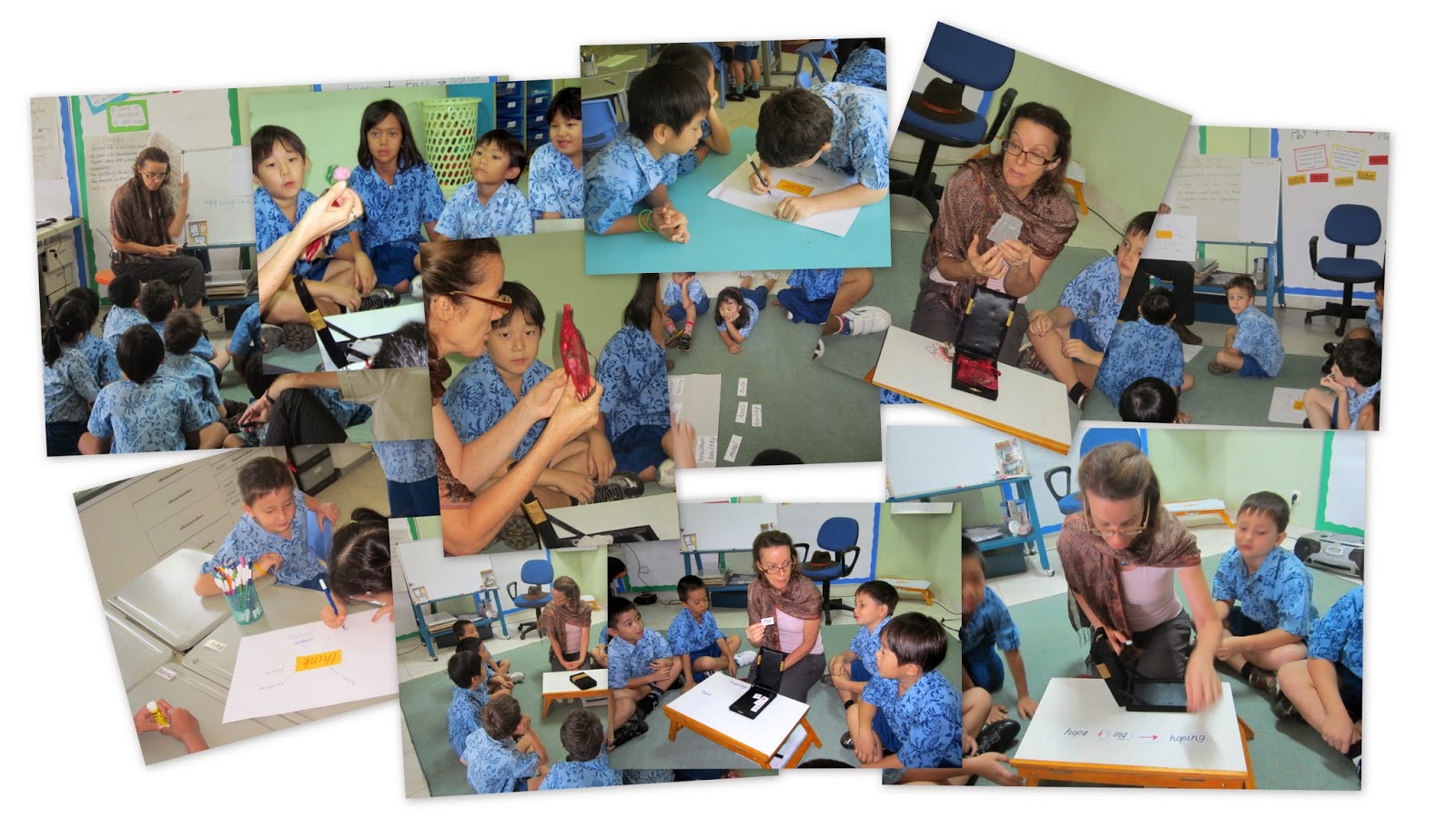
Investigating the underlying structure of words through the analogy of  'opening up a mystery box'. This activity introduces an important linguistic feature, which demonstrates that words have many layers (substructure) that need to be uncovered to reveal the reason for the spelling. Only through careful investigation of these 'hidden' layers can we begin to fully understand why and how words are spelled the way they are. These grade 2/3 students are investigating the underlying structure of words using the analogy of a mystery box. This activity was specifically planned to introduce the concept that words have a linguistic structure that is not at first 'visible'. These students did not have any previous knowledge of how the English spelling system really works. Our investigative question:  Why is <hoping> spelled with one <p>  but <hopping> spelled with double <pp>?  The answer lies in the MEANING...this may, at first, seem like a simpl...

Investigating verbs to understand the suffix (-ed) and more...

Image
...in the previous post I discussed some ways to utilise literature, such as big books, to explicitly guide a structured word inquiry. This particular big book, This is the Bear and the Scary Night , uses a wide range of expressive verbs, highlighting the (-ed)  suffix to indicate the past tense. What an excellent way  to guide a structured word inquiry into:  -->the function of the suffix (-ed); -->the phonemes that represent the suffix (-ed); -->the suffixing pattern for the final, single,  silent (e); and glow + ed --> glow ed Why doesn't the final <w> double? --> an investigation into some significant vowel phonemes to represent the long /o/ phoneme. float + ed --> float ed Why are there no changes to the base? hope/ + ed --> hop(e) ed Why is the final, single, silent (e) removed? swoop + ed --> swoop ed How does the etymology of this word help us understand the grapheme (oo)? Use authentic wri...